

Apple called the October 26, 2026 announcement of the eighth-generation iPad mini its “biggest update ever” for the line, and the early reviews that followed largely agreed. Announced just ahead of availability on November 6, the new model (officially the iPad mini with A20 Pro) packs an 8.5-inch Super Retina XDR OLED display into a thinner, lighter chassis, adds IP67 water and dust resistance, and jumps to the same A20 Pro chip found in the iPhone 18 Pro and iPhone Duo. It starts at $699 for the 128GB Wi-Fi model. Below are ten engaging details that capture why this compact tablet feels like a meaningful step forward—and why the price jump has reviewers mixed.
1. It is thinner than an open iPhone Duo and nearly as light.
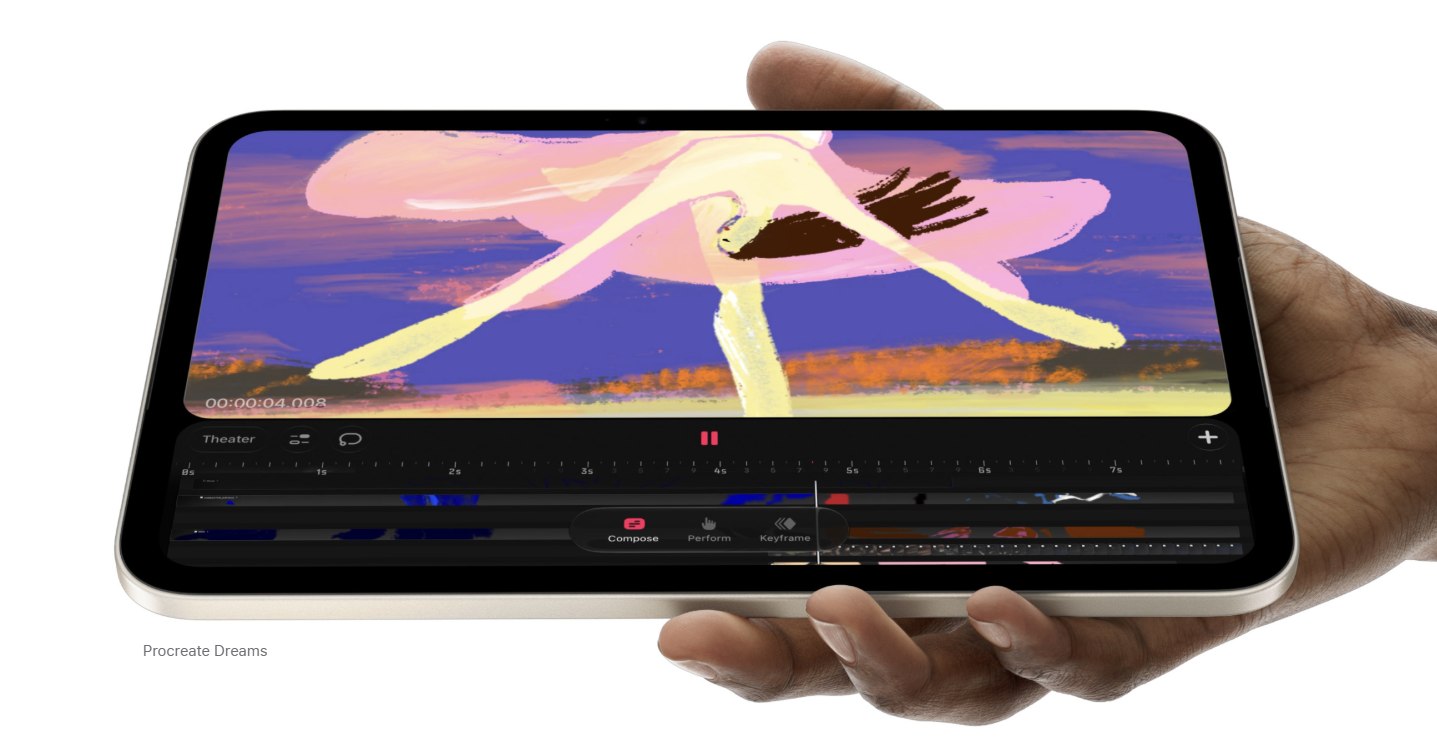
At 5.4 mm thick, the 2026 mini is 0.9 mm thinner than the 2024 A17 Pro model (6.3 mm). That puts it just 0.2 mm thicker than the unfolded iPhone Duo and thinner than the 11-inch iPad Pro. Weight drops from 293 g to 255 g for the Wi-Fi version (263 g with cellular). Reviewers note the difference is immediately noticeable in the hand; the device feels more like a premium e-reader or oversized phone than a traditional tablet. Apple achieved the slimmer profile while reducing bezel width by 24 percent, which is how the screen grew without enlarging the overall footprint (195.3 × 132.6 mm versus 195.4 × 134.8 mm previously).
2. The first non-Pro iPad with OLED—and it is not tandem.
This is Apple’s first OLED display outside the Pro line. The 8.5-inch panel (up from 8.3 inches) delivers 2316 × 1512 resolution at 326 ppi, a 2,000,000:1 contrast ratio, and peak HDR brightness of 1,200 nits—more than double the previous generation’s 500-nit maximum. Full-screen SDR brightness rises to 600 nits. Deep blacks and improved outdoor visibility are the standout gains. It is a single-stack OLED rather than the tandem design on iPad Pro models, and there is still no ProMotion 120 Hz refresh rate. Optional nano-texture glass is available on the 256GB and 512GB models for an extra $100, reducing reflections for outdoor use.
3. It is the first iPad with an official IP67 rating.
Previous minis had no formal water or dust resistance. The 2026 model is rated IP67 (protected against dust and immersion in up to 1 meter of water for 30 minutes). Apple enabled this in part through its new Acoustic Display speaker system: specially designed woofers work through the display itself, with custom tweeters between the glass and aluminum body, eliminating traditional speaker cutouts. Reviewers say the audio is clearer and more immersive for a device this size, though it remains stereo rather than true spatial audio. The rating makes the mini more practical for travel, outdoor sketching, or use near water.
4. The A20 Pro is a genuine generational leap—and storage decides the core count.
Built on TSMC’s 2-nanometer process (versus the 3-nanometer A17 Pro), the A20 Pro brings Neural Accelerators in each GPU core. Apple claims up to 4.5× faster AI performance, up to 2.7× better graphics, and roughly 60 percent faster multi-threaded CPU performance versus the prior mini. The 128GB and 256GB models use a binned 5-core CPU (2 performance/super cores + 3 efficiency) and a single 16-core Neural Engine. Only the 512GB configuration gets the full 6-core CPU and dual 16-core Neural Engine. All variants have a 7-core GPU. Real-world tests show the chip handles on-device models, local LLMs, and creative apps far more fluidly than the 2024 model, which launched with a year-old chip.
5. The front camera finally moved to the landscape edge.
For years the Center Stage 12-megapixel front camera sat on the short (portrait) edge, which felt awkward during video calls or landscape use. On the 2026 mini it has been repositioned to the long edge and given a wider f/2.0 aperture (up from f/2.4). The change makes FaceTime and video calls more natural when the tablet is held or propped in landscape orientation—the more common way most people use a mini. The rear 12-megapixel camera remains capable of 4K video at 60 fps.
6. It supports Apple Pencil Pro and the USB-C Pencil, plus faster connectivity.
Both the Apple Pencil Pro ($129) and the more affordable Apple Pencil (USB-C, $79) work. The combination of the larger OLED screen, thinner body, and strong processing makes the mini especially appealing for note-taking, illustration, and markup on the go. Connectivity upgrades include Wi-Fi 7 (via Apple’s N1 chip), Bluetooth 6, and, on cellular models, Apple’s C2 modem for up to 50 percent faster 5G speeds and better efficiency. USB-C remains the port, and fast charging is supported (the second iPad after last year’s Pro to gain the feature).
7. Two colors only: Midnight and Starlight.
Gone are the blue and purple options of the 2024 model. The 2026 mini comes exclusively in Midnight (dark) and Starlight (light). The restrained palette matches the more premium materials and thinner design. Storage starts at 128GB and tops out at 512GB; there is no 1TB option. Pricing is $699 / $799 / $999 for Wi-Fi models (128/256/512GB) and $849 / $949 / $1,149 for Wi-Fi + Cellular. Education pricing begins around $649. Nano-texture glass adds $100 on the higher-storage models.
8. Battery life stays familiar while the device becomes more efficient.
Apple continues to advertise up to 10 hours of web or video use on Wi-Fi. Reviewers report that real-world endurance is similar to the previous generation despite the brighter OLED panel and more powerful chip, thanks to the efficiency of the 2-nanometer process and the thinner chassis. The lighter weight makes all-day carrying easier, and the IP67 rating adds peace of mind without a noticeable battery penalty.
9. It runs iPadOS 27 and is built for on-device AI.
Shipping with iPadOS 27.2, the mini benefits from the latest multitasking, Apple Intelligence features, and creative tools. The A20 Pro’s Neural Accelerators and (on the 512GB model) dual Neural Engine make on-device model running and local LLM tasks practical. Reviewers who tested creative apps and AI features found the performance jump more noticeable here than on larger iPads, because the mini’s size encourages one-handed or portable use where snappiness matters most.
10. The price increase is the biggest caveat.
The previous generation launched at $499 in 2024 and later rose to $599. The new model starts at $699—$100 more than the recent price and $200 more than the original 2024 launch price. Fully loaded configurations with nano-texture glass and cellular easily exceed $1,200. Reviewers from The Verge, WIRED, The Guardian, Ars Technica, and others call it the best mini yet and a “dream device” for fans of the form factor, yet repeatedly note that the price places it uncomfortably close to the 11-inch iPad Air (M4). If you already love the mini size, the OLED, thinness, water resistance, and A20 Pro make a compelling case. If you are choosing among iPads for the first time, larger models may offer better value.
Who is it for?
The 2026 iPad mini is ideal for travelers, artists, students, or anyone who wants a highly portable secondary screen that can also serve as a primary device for media, notes, and light productivity. The combination of a larger, brighter OLED panel, dramatically improved portability, first-time water resistance, and a current-generation flagship mobile chip makes it the most refined mini Apple has released. The main drawbacks remain the lack of ProMotion, Touch ID only (no Face ID), the storage-tied chip binning, and the elevated starting price. For those who have been waiting for a truly modern mini, the upgrades justify the cost. For everyone else, waiting for a possible price drop or comparing it carefully against the Air remains wise advice.
In short, Apple finally gave the iPad mini the display, durability, and performance treatment it has long deserved. The result is a compact tablet that feels current rather than compromised—provided the $699 entry point fits your budget.