


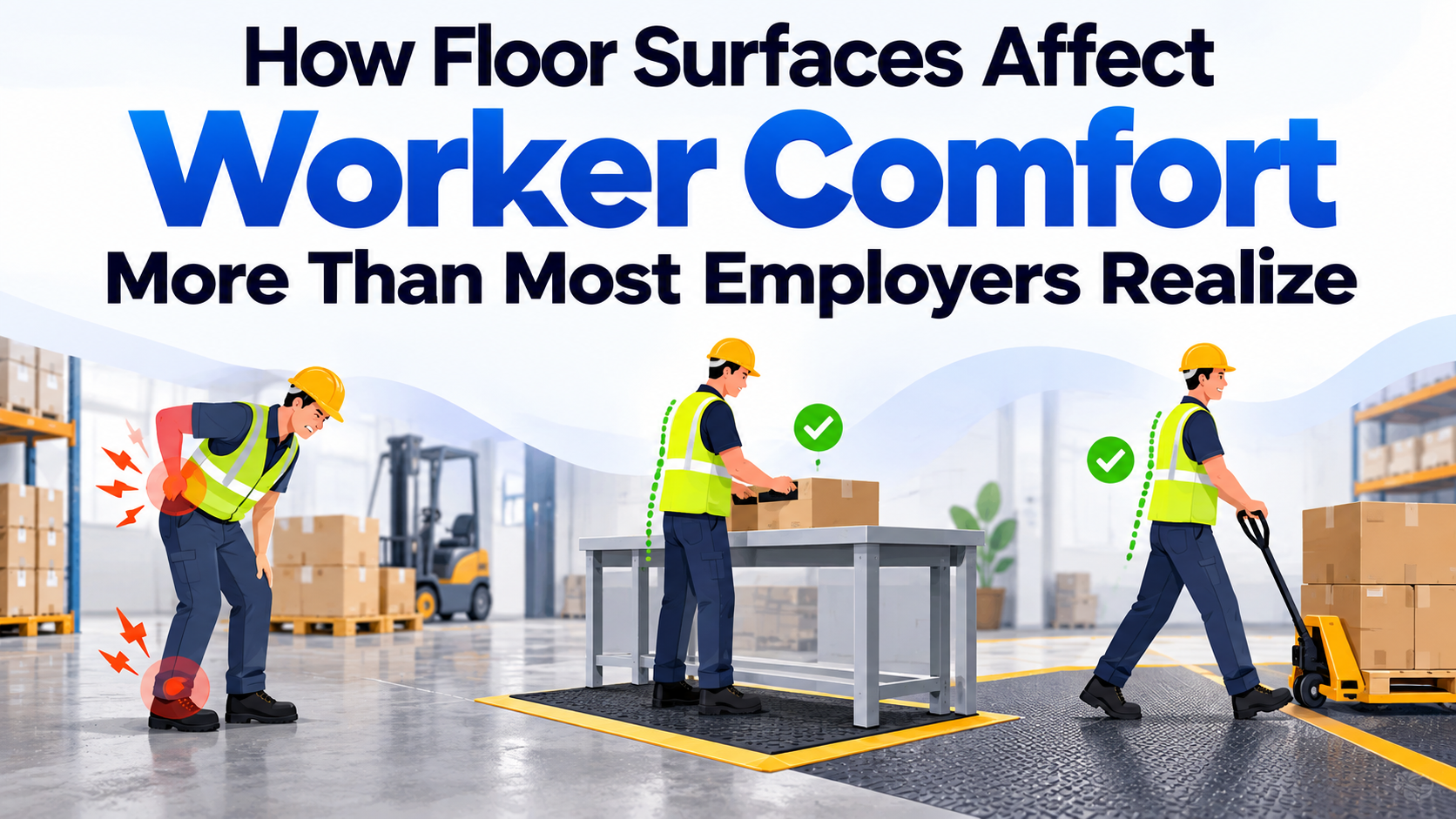
Most employers think about desks, chairs, and screens first. Few think about the ground beneath their staff’s feet. That oversight costs more than it seems.
Floors shape how people feel at the end of every shift. A poor surface can quietly drain energy, raise pain levels, and lower morale. A good one can do the opposite. This article explains why flooring matters, what it costs when ignored, and how simple fixes can help.
Why the Floor Matters More Than You Think
Every step sends force through the heel, up the legs, and into the spine. Over eight hours, those small impacts add up fast. Workers rarely connect their aching backs to the surface they stand on.
The Body Absorbs Every Step
A hard floor offers no give. The body must soak up the shock instead. Your feet, calves, and lower back pick up the slack, and they rarely get a rest.
You can’t see the effort, but it’s there. Most people feel fine at 9 a.m. By mid-afternoon they’re slouching, snapping at colleagues, and rereading the same line twice.
Why Hard Floors Leave People Exhausted
Rigid ground leaves little room to shift and flex. The leg muscles stay clenched, so blood moves sluggishly. By evening, ankles swell, and legs feel like lead.
Tired workers also make more mistakes. Fatigue is a safety issue as much as a comfort issue.
Common Floor Types and How They Feel
Not every surface treats the body the same way. Each material has strengths and weaknesses.
Concrete and Tile
Concrete is the toughest surface in most workplaces. Warehouses, workshops, and factories rely on it for good reason. It lasts for decades and can handle heavy loads.
Comfort, however, is another story. Concrete has almost no cushioning. Tile behaves much the same way, and it can feel cold as well. Workers on these surfaces tend to report the most leg and back pain.
Carpet, Vinyl, and Worn Surfaces
Carpet adds a soft layer that absorbs some impact. It also reduces noise, which helps concentration. Vinyl sits somewhere in the middle, though cheaper versions feel almost as hard as tile.
Cracked or curled flooring brings trip hazards on top of discomfort. Slips and falls are among the most common workplace injuries. A damaged floor invites them.
The Hidden Costs of Uncomfortable Floors
Employers often see flooring as a one-time expense. Few track what a poor floor costs each year. The real figures hide inside other budget lines.
Lost Productivity
Uncomfortable workers move less, rest more, and lose focus sooner. They shift their weight, lean on counters, and take extra breaks. None of this appears on a timesheet.
Even a small drop in output adds up across a team. A ten-minute loss per person per day becomes dozens of hours each month.
Absenteeism and Staff Turnover
Chronic pain leads to sick days, and some cases become formal injury claims. Claims bring medical bills, paperwork, and higher insurance premiums. Prevention is almost always cheaper.
People also leave jobs that hurt. They rarely say the floor was the reason. Replacing a trained employee is expensive, and the know-how that walks out the door is hard to win back.
How Floor Mats Improve Comfort
Replacing an entire floor is often unrealistic. Budgets are tight, and building work disrupts operations. Fortunately, there is a simpler route. Floor mats can transform how a space feels underfoot.
Anti-Fatigue Mats
Anti-fatigue mats are made for people who need to stand for long periods. Their cushioned surface gives slightly with each step. That slight bounce makes the muscles flex a little, which keeps blood moving.
Workers often report a change within a few days. Their legs ache less by closing time. Back tension eases too. Cashiers, line workers, cooks, and lab techs get the most out of them.
Placement matters. Mats work best where people stand in one spot for long stretches. Picture a checkout lane, a prep bench, or a packing station.
Indoor Mats for Doorways and Busy Corridors
Indoor mats do a different job. They sit by doors and along busy routes. Their main task is catching dirt and water before it spreads.
Wet floors are a main cause of slips. A good entrance mat dries shoes and keeps the main floor safe. Some also add light cushioning, which is handy in corridors, reception areas, and break rooms.
Picking the Right Thickness and Material
Cheap mats aren’t worth much. Thin ones flatten within weeks and give almost no support. Rubber, nitrile, and dense foam last far longer.
Match the thickness to the job. A desk-based role needs less cushioning than a busy kitchen. Check the edges too. Beveled ones are less likely to catch a toe, and slip-resistant backing keeps the mat firmly in place.
Comfort Goes Beyond the Floor
Floors are only one part of the picture. Light, temperature, noise, and rest all play a role.
Rest and Recovery Spaces
Workers need real recovery time. This matters most for night-shift and rotating-shift staff. Their bodies already fight against natural sleep rhythms.
A quiet rest room can make a big difference. Darkness is the key ingredient. Total blackout blinds block outside light completely, which helps tired staff nap properly during breaks or between shifts.
Temperature, Noise, and Light
Cold floors make feet feel uncomfortable even in a warm room. Rubber mats and carpet tiles add insulation. They also take the edge off the racket of footsteps and dropped tools.
Glare from a window can leave people squinting and sore-headed by noon. Adjustable blinds and a few well-placed lamps let workers tune their own corner of the room.
Practical Steps for Employers
Improving floor comfort does not require a large budget. A short, careful review can reveal quick wins.
Audit, Then Test
Walk through the building during a busy shift. Notice where people stand still, and ask them where their feet hurt. Their answers will point to the biggest problems.
Choose two or three high-impact areas first. Lay down good floor mats in those spots. After a few weeks, ask your people how their feet, backs, and energy levels feel.
Maintain What You Install
Mats need regular cleaning to stay safe and effective. Caked-on grime makes them slippery and wears them out sooner. Swap a mat out once the corners start to curl or crack.
Keep an eye on indoor mats by the entrances, particularly when it rains. Once soaked, a mat can’t catch any more water. So, rotate or replace them as needed.
Conclusion
The floor is the one surface every worker touches all day. Yet it rarely appears in conversations about workplace comfort. That blind spot is costing many businesses more than they realize.
Hard, worn, or cold floors drain energy and invite injury. The damage is easy to reverse, though. Anti-fatigue mats take the sting out of long hours on your feet. Indoor mats keep walkways dry and safe. Total blackout blinds give shift workers the dark room they need to recover.
Begin with a conversation. Ask your team where it hurts, than tackle those spots first. A few modest upgrades now can leave you with a healthier, happier, and more productive workplace.