

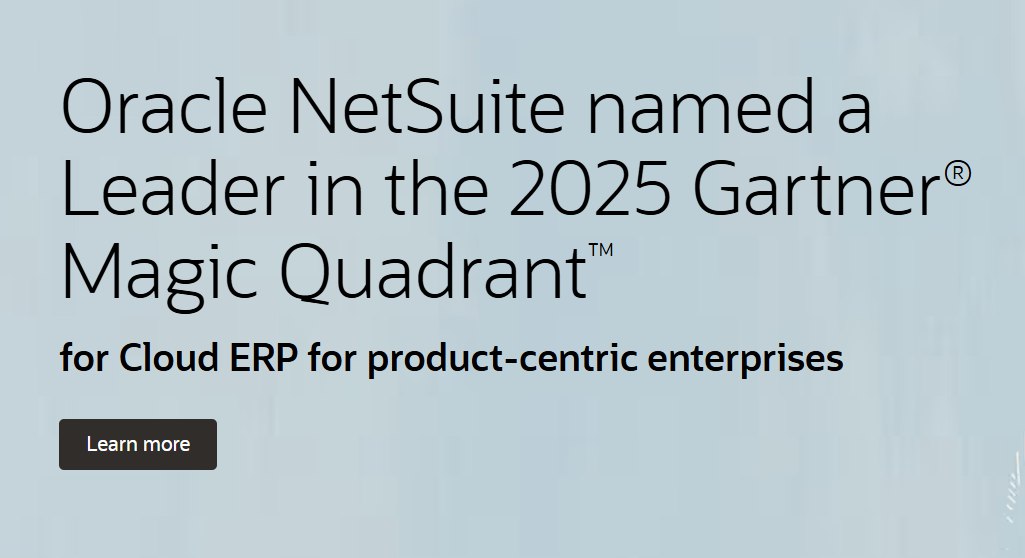
Oracle NetSuite remains the leading cloud-based ERP (enterprise resource planning) platform in 2026, powering more than 43,000 organizations worldwide across industries like retail, manufacturing, wholesale distribution, software, and professional services. Acquired by Oracle in 2016, NetSuite has evolved into the #1 AI-powered cloud ERP solution, blending financial management, CRM, e-commerce, inventory, supply chain, and HR into a single, real-time system.
In early 2026, NetSuite 2026 Release 1 introduced significant AI advancements, including Intelligent Close Manager, AI-powered bank transaction matching, Exception Management for fraud detection, and rules-based pricing tools. These updates address CFO priorities: faster closes, stronger controls, and margin optimization amid economic uncertainty.
This comprehensive 2026 review examines NetSuite’s core features, key integrations, pricing structure, real user feedback, pros and cons, and whether it suits your business.
Core Features and 2026 Enhancements NetSuite delivers a unified suite that eliminates data silos. Key modules include:
- Financial Management: Real-time general ledger, accounts payable/receivable, fixed assets, revenue recognition, multi-currency, and multi-entity consolidation. The 2026.1 release adds Intelligent Close Manager (AI-driven monitoring for financial closes), AI-powered bank transaction matching (improved accuracy and speed), and Exception Management (vendor-based fraud detection).
- Inventory and Order Management: Multi-location tracking, demand planning, replenishment, and advanced lot/serial traceability. New AI capabilities optimize pricing decisions using inventory levels, costs, and sales trends.
- CRM and Sales: Lead/opportunity management, quoting, sales forecasting, and customer service automation. Tight integration with financials ensures accurate revenue recognition.
- E-commerce and Commerce: SuiteCommerce (B2C/B2B storefronts) with headless options, personalized shopping, and seamless order-to-cash.
- Supply Chain and Manufacturing: Procurement, production planning, work orders, and warehouse management (WMS). 2026.1 enhances mobile apps (Ship Central, SCM) and introduces the NetSuite Connector for Loop Returns.
- Human Capital Management (HCM): Payroll, benefits, time tracking, and talent management for global teams.
- Professional Services Automation (PSA): Project management, resource allocation, billing, and profitability tracking.
AI integration is a 2026 highlight: generative AI for narrative summaries, automated reconciliations, and planning agents that accelerate decision-making.
Integrations and Ecosystem NetSuite’s open architecture supports hundreds of pre-built connectors via SuiteCloud and Oracle Integration Cloud. Popular integrations include:
- E-commerce: Shopify, BigCommerce, Magento, Amazon, eBay.
- Payment processors: PayPal, Stripe, Authorize.net.
- CRM: Salesforce (bidirectional sync).
- Shipping: ShipStation, UPS, FedEx.
- Analytics: Tableau, Power BI.
- HR/payroll: ADP, Paychex.
- Custom: REST/SOAP APIs, SuiteScript for bespoke builds.
The SuiteApp.com marketplace offers thousands of third-party apps, from industry-specific tools to productivity add-ons.
Pricing Structure in 2026 NetSuite uses a modular, subscription-based model without public pricing—quotes are custom. Typical components:
- Base Platform License: ~$999/month (core ERP, financials, basic inventory/CRM).
- User Licenses: $99–$199/month per full user (role-based: employee, accountant, executive).
- Modules/Add-ons: Extra fees for advanced CRM, e-commerce, WMS, PSA, etc.
- Implementation: $25,000–$150,000+ one-time (consulting, data migration, configuration).
- Customization/Integrations: $150–$250/hour or flat fees; ongoing support ~20% of annual license.
Real-world estimates for 2026:
- Small business (1–10 users): $30,000–$55,000 annual + $25,000–$45,000 implementation.
- Mid-market (10–100 users): $60,000–$150,000+ annual.
- Enterprise (100+ users, global/multi-entity): $150,000–$300,000+ annual.
Total first-year cost often ranges $50,000–$250,000+, with ROI typically 18–24 months through efficiency gains.
Pros of NetSuite
- Unified Platform: One database eliminates reconciliation errors and provides real-time visibility.
- Scalability: Grows from startups to enterprises without switching systems.
- Cloud-Native: Automatic upgrades, 99.9%+ uptime, global access.
- Customization: SuiteScript, workflows, and dashboards adapt to unique needs.
- Strong Reporting/Analytics: Saved searches, dashboards, and AI insights drive decisions.
- Global Capabilities: Multi-currency, multi-subsidiary, multi-language, compliance support.
- 2026 AI Boost: Faster closes, fraud detection, and pricing optimization.
Cons of NetSuite
- High Cost: Expensive for very small businesses; implementation can exceed $100,000.
- Steep Learning Curve: Complex interface requires training; not intuitive for beginners.
- Performance Issues: Some users report slowdowns with large datasets or heavy customizations.
- Implementation Time: 3–12 months typical; poor partners cause overruns.
- Customization Dependency: Advanced features often need developers, adding costs.
- Support Variability: Mixed reviews on response times despite premium tiers.
User Ratings and Feedback (2026)
- Gartner Peer Insights: 4.2/5 (390+ reviews) – Praised for unification and scalability.
- G2: 4.1/5 – Strong on features, mixed on ease of use.
- Capterra: 4.2/5 (1,800+ reviews) – High marks for financials, lower for support speed.
Many users report 30–50% faster closes and improved accuracy after adoption.
Who Should Use NetSuite? Ideal for mid-market to enterprise companies ($10M–$1B+ revenue) needing growth-ready ERP. Best for complex operations, multi-entity/global businesses, or those outgrowing QuickBooks/Xero. Not ideal for very small startups or simple needs.
Alternatives
- Odoo: Affordable, open-source.
- Sage Intacct: Strong financials, less broad.
- Acumatica: Flexible deployment.
- SAP Business One: Similar scope, different pricing.
NetSuite excels for organizations prioritizing scalability, real-time data, and AI-driven efficiency. While costly and complex, its unified platform delivers long-term ROI for growing businesses.