


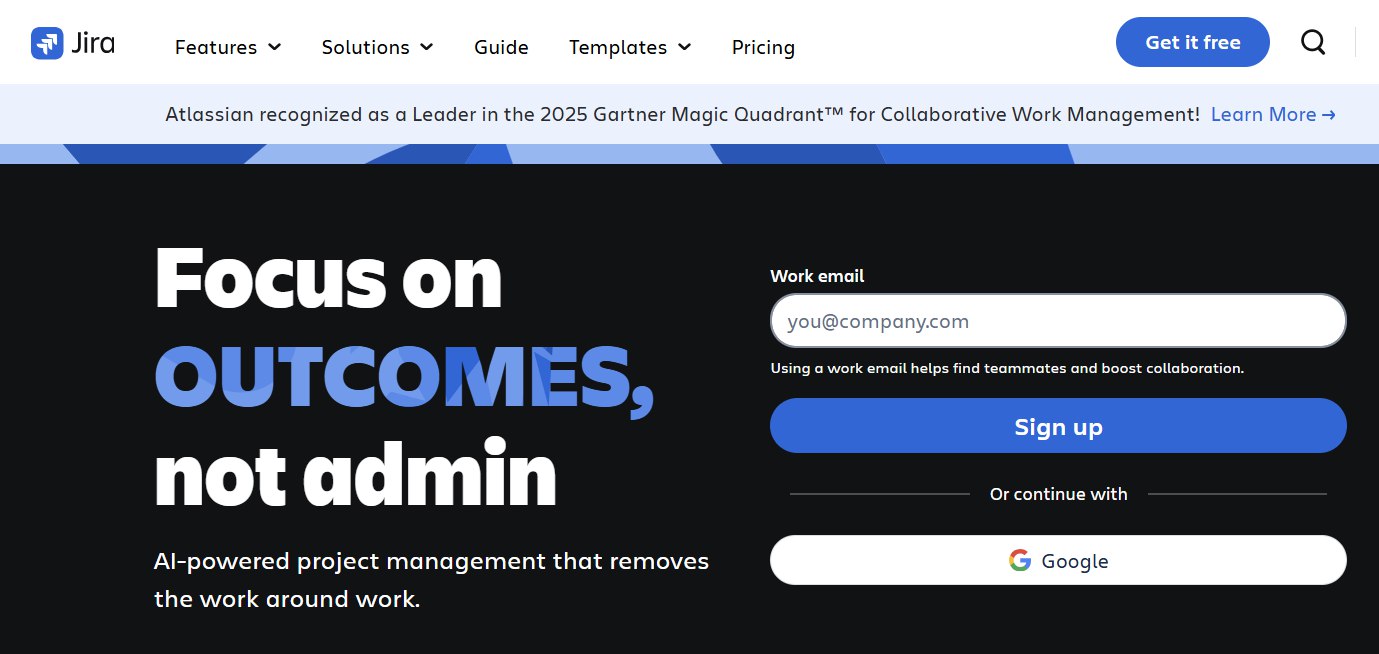
In 2026, Jira Software remains the undisputed powerhouse for Agile project management and issue tracking, particularly in software development and IT environments. Developed by Atlassian, Jira has evolved from a simple bug tracker into a highly customizable platform that powers workflows for millions of teams worldwide. This in-depth review examines Jira’s current state as of February 2026, covering its latest features, pricing updates, pros and cons, integrations, user experiences and whether it justifies its reputation as the industry standard.
Jira Software is built for every member of a software team to plan, track and release great software. It excels in supporting Scrum, Kanban and hybrid methodologies while offering deep customization for complex workflows. In 2026, Atlassian continues to invest heavily in the tool, introducing seasonal releases, enhanced AI capabilities and streamlined administration to address longstanding pain points.
Recent updates reflect Atlassian’s shift toward predictable delivery. The company adopted a new seasonal release cycle in 2026, with major feature drops aligned to events like Team ’26 in May. This creates clearer roadmaps for admins and reduces surprises from frequent, unpredictable patches. Key enhancements include refined drag-and-drop experiences in work items, improved sprint capacity calculations in Jira Plans (now incorporating completed sprints), native approvals in Premium workflows and custom fields in Focus areas for better data capture.
The new workflow editor has become the default, offering parity with the legacy version while promising a more intuitive interface. Field management sees major changes: starting February 2026, newly created fields no longer auto-add to configurations, paving the way for unified “Field schemes” rolling out in beta and fully by mid-2026. This aims to simplify administration for large enterprises.
Jira’s core strength lies in its unmatched flexibility. Teams can create custom issue types, workflows with conditions, validators and post-functions, and boards tailored to specific processes. Agile reporting remains world-class, with burndown charts, velocity reports, cumulative flow diagrams and epic burndowns providing actionable insights.
Developer integrations shine brightest. Jira links seamlessly with GitHub, GitLab, Bitbucket and CI/CD pipelines, automatically updating issues with commits, pull requests and builds. The Marketplace boasts thousands of apps, from automation (via Jira Automation) to advanced roadmapping and security scanning.
In 2026, AI features expand subtly but impactfully, including smarter summaries, automation suggestions and enhanced search. Rovo integration connects Jira to broader Atlassian ecosystem knowledge, aiding discovery across projects.
Pricing remains tiered and user-based, with notable 2026 adjustments. Free plan supports up to 10 users with basic Scrum/Kanban, roadmaps and reporting. Standard starts around $8.15/user/month (billed annually), Premium at $15.25/user/month (with advanced roadmaps, automation limits and sandbox), Enterprise custom (for scale, analytics and security).
Cloud list prices rise modestly: Standard +5%, Premium/Enterprise +7.5-10%. Data Center sees 15% increases from February 17, 2026, pushing organizations toward cloud or hybrid. Despite hikes, value holds for teams leveraging full capabilities.
Pros dominate for the right users. Unrivaled workflow customization lets teams model any process. Deep dev tool integrations automate handoffs. Agile reporting standards set benchmarks. Vast ecosystem extends functionality. Scalability suits startups to Fortune 500s. Robust permissions and audit logs ensure compliance.
Cons persist. Steep learning curve frustrates newcomers; terminology and setup overwhelm non-technical teams. Interface can feel cluttered, especially on dense boards. Administration demands dedicated Jira admins for large instances. Costs escalate quickly at scale with add-ons. Performance occasionally lags on massive projects without optimization. Overkill for simple task management; alternatives like Trello or Monday suit lighter needs.
User reviews in 2026 average 4.3-4.4/5 across Gartner Peer Insights (over 2,600 ratings), Capterra (15,000+ reviews) and SoftwareReviews (8.9/10 CX score). Praise focuses on reliability for complex projects: “Robust for software development and agile workflows,” one Gartner reviewer noted January 2026. Complaints target complexity: “Steep learning curve” and “cluttered interface” recur.
Gartner Peer Insights highlights Jira’s strength in enterprise agile planning, with high marks for issue tracking and customization. Capterra users appreciate transparency and collaboration but note bugs and reliability concerns in some integrations.
Use cases vary. Software dev teams thrive with bug tracking, sprints and dev ops links. IT service management uses Jira Service Management extension. Non-tech teams adapt it for marketing or HR but often find it heavy. Large enterprises leverage Advanced Roadmaps for portfolio visibility.
Compared to rivals, Jira leads in depth for dev-focused Agile. Monday.com offers visual appeal and ease for broader teams. Asana suits collaborative workflows. ClickUp provides all-in-one flexibility at lower cost. Jira wins for teams needing granular control and integrations.
In 2026, Atlassian pushes cloud migration, with Data Center support winding down by 2029 (no new features post-March 2026, end-of-life 2029). Cloud investments in Rovo, AI and security make it compelling for most.
Verdict: Jira Software remains king for professional, high-velocity software development in 2026. Its customization, integrations and reporting are unmatched for Agile/Scrum teams. For non-dev or small groups, alternatives may suffice due to complexity and cost.
If your team builds software, tracks intricate issues or scales Agile, Jira delivers unmatched power. For simpler needs, explore lighter options. Atlassian’s seasonal releases and admin improvements signal continued evolution, solidifying Jira’s position as the go-to for serious project management.