

1. Origins and Founding Vision
Palantir Technologies was founded in 2003 by Peter Thiel, Alex Karp, Joe Lonsdale, Stephen Cohen, and Nathan Gettings. The company’s name comes from the “seeing stones” in The Lord of the Rings, symbolizing its mission to provide clarity through data. Initially, Palantir focused on building software for intelligence agencies to detect patterns in massive datasets, particularly in the fight against terrorism.
The founding vision was to combine human judgment with machine learning. Unlike companies that sought to replace analysts, Palantir aimed to augment them, giving decision-makers tools to interpret complex data more effectively.
2. Government Roots and Gotham
Palantir’s first major product, Gotham, was designed for government agencies. It became widely used by the CIA, FBI, and U.S. Department of Defense. Gotham integrates disparate data sources—surveillance, communications, financial records—and helps analysts uncover hidden connections.
This deep relationship with government clients gave Palantir a reputation as a “spy-tech” company. Critics argued it was too reliant on government contracts, but supporters saw Gotham as indispensable for national security.
3. Expansion into Commercial Markets
For years, Palantir struggled to break into the private sector. Its software was complex, expensive, and tailored to government needs. However, the launch of Foundry changed that. Foundry is a platform for enterprises to integrate and analyze data across departments, from supply chains to finance.
By 2025, Foundry has become a cornerstone for industries like healthcare, manufacturing, and energy. Companies use it to optimize operations, forecast demand, and manage risk. This shift diversified Palantir’s revenue base and proved it could scale beyond government contracts.
4. The Rise of Artificial Intelligence Platform (AIP)
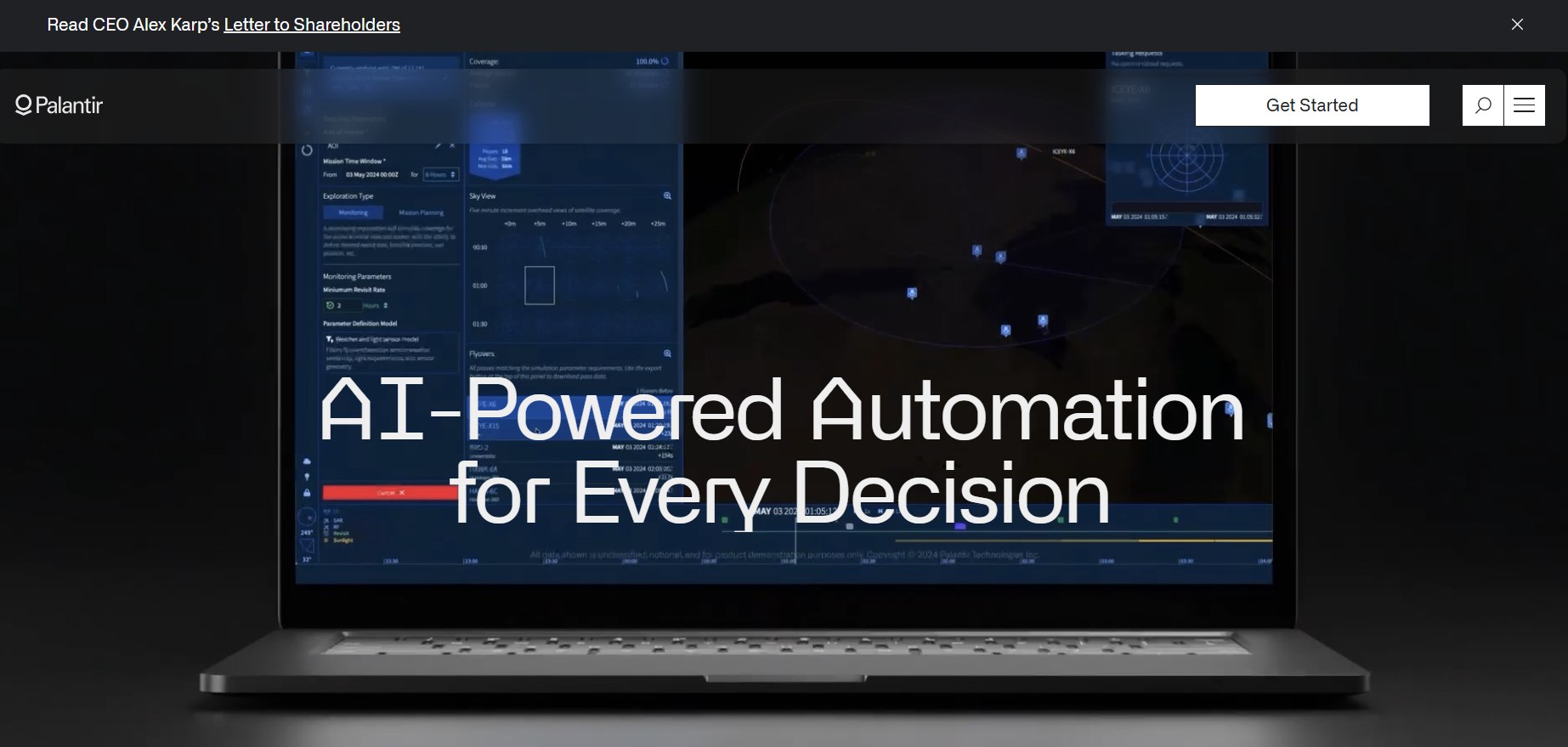
In 2023, Palantir introduced its Artificial Intelligence Platform (AIP), which integrates large language models and machine learning into operational workflows. Unlike experimental AI tools, AIP is designed for mission-critical environments.
By 2025, AIP is considered core AI infrastructure. Governments use it for defense simulations, while corporations deploy it for predictive analytics and automation. This positioned Palantir as a leader in the AI revolution, not just a data analytics company.
5. Financial Performance and Profitability
For years, Palantir was criticized for being unprofitable. That changed in 2025. The company proved it could scale profitably, with strong margins and consistent growth.
- Stock Performance: Palantir’s stock surged over 120% in 2025, reflecting investor confidence.
- Market Cap: By December 2025, Palantir’s market capitalization reached approximately $447 billion, placing it among the world’s most valuable tech firms.
- S&P 500 Inclusion: Palantir joined the S&P 500 index in late 2024, cementing its status as a mainstream player.
6. Technology Stack and Innovation
Palantir’s platforms—Gotham, Foundry, and Apollo—form a robust tech stack. Apollo is particularly important, enabling continuous deployment and updates across client environments, even in sensitive government systems.
In 2025, Palantir continues to innovate by combining data integration, machine learning, and operational intelligence. Its software is highly customizable, allowing clients to adapt it to complex environments.
7. Controversies and Criticisms
Palantir has faced criticism for its secrecy and involvement in surveillance. Civil liberties advocates worry about its role in government monitoring, immigration enforcement, and predictive policing.
Additionally, some investors argue Palantir’s reliance on government contracts remains a risk. Others question its valuation, suggesting hype around AI inflates expectations. Despite these concerns, Palantir’s consistent delivery in 2025 has silenced many skeptics.
8. Global Reach and Partnerships
Palantir is no longer just an American company. It has expanded globally, working with NATO allies, European governments, and corporations in Asia. Its platforms are used in:
- Healthcare: Managing patient data and optimizing hospital operations.
- Energy: Forecasting demand and improving grid resilience.
- Manufacturing: Streamlining supply chains and reducing waste.
This global reach ensures Palantir’s relevance across industries and geographies.
9. Competitors and Market Position
Palantir competes with companies like Snowflake, Databricks, Microsoft, and Google Cloud. However, its differentiation lies in combining data integration with operational AI. While competitors focus on cloud storage or analytics, Palantir embeds AI directly into decision-making processes.
This unique positioning makes Palantir less of a niche contractor and more of a foundational AI company.
10. The Future of Palantir
Looking ahead, Palantir aims to become the operating system for modern enterprises and digital states. Its platforms are not just tools but infrastructure—like electricity or the internet—essential for running organizations.
Key future directions include:
- AI-driven defense systems for governments.
- Enterprise automation across industries.
- Ethical debates around surveillance and privacy.
By 2025, Palantir has transformed from a controversial startup into a global powerhouse shaping the future of AI and data analytics.
Conclusion
Palantir Technologies is one of the most fascinating companies of the 21st century. From its origins in counterterrorism to its current role as a leader in AI infrastructure, Palantir embodies both promise and controversy.
The 10 things you must know are:
- Founded in 2003 with a vision of augmenting human judgment.
- Gotham cemented its role in government intelligence.
- Foundry expanded into commercial markets.
- AIP positioned it as core AI infrastructure.
- Achieved profitability and massive stock growth in 2025.
- Built a powerful tech stack with Gotham, Foundry, and Apollo.
- Faced controversies around surveillance and valuation.
- Expanded globally across industries.
- Differentiated from competitors by embedding AI into operations.
- Aims to be the operating system for enterprises and states.